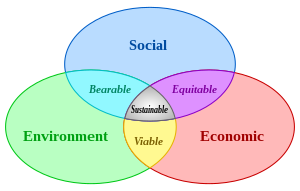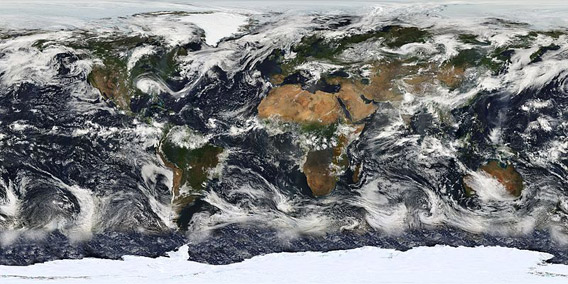
Here's a good article on solutions to the many problems we often discuss in World Development. The authors suggest that we have the knowledge to make positive changes, we just need leaders who are brave enough to stand up to the status quo and replace short term thinking with a longer term, sustainable perspective.
"The current system is broken," said climatologist Bob Watson, a Blue Planet winner in 2010 and the instigator of the report. "It is driving humanity to a future that is 3-5 degrees Celsius warmer than our species has ever known, and is eliminating the ecology that we depend on for our health, wealth and senses of self. We cannot assume that technological fixes will come fast enough. Instead we need human solutions. The good news is that they exist but decision makers must be bold and forward thinking to seize them."
Lecture slides, handouts, links and revision guides for WJEC AS Level World Development.
Monday, 23 April 2012
Sunday, 22 April 2012
Theme 1: Key Idea 3 Part 1 and Part 2 - Sustainable Development
The best resource for your revision is the document in the following linked named 'Key Idea 3 Summary.doc' and contains everything you need to know.
Part 1 - Sustainable Development
Case Study: Eco Dyfi (and Agenda 21 should be well known to you as well)
Case Study: Oil in Alaska
LINK TO ALL THE RESOURCES YOU NEED
Any issues, just use the comments below.
Part 1 - Sustainable Development
For Key Idea 3 Part 1 you need to know:
- Understand what sustainable development is, and how the concept emerged.
- An example of a sustainable development project at a local, regional or national level that aims to improve livelihoods and is sustainable.
Case Study: Eco Dyfi (and Agenda 21 should be well known to you as well)
For Key Idea 3 Part 2 you need to know:
- That global citizenship and global responsibility require that the costs and benefits of development are considered.
- Familiarity with some of the main costs and benefits of development projects – socially, economically and environmentally.
- Awareness of the costs and benefits (both nationally and internationally) of the exploitation of oil in Alaska.
Case Study: Oil in Alaska
LINK TO ALL THE RESOURCES YOU NEED
Any issues, just use the comments below.
Theme 1: Key Idea 2 Part 2 - Global Interdependence
Global interdependence means that environmental problems and resource use are inter-related. Problems in one location may have an environmental impact elsewhere - e.g. the UK-Scandanavia Case Study on Acid Rain.
Another example is climate change. People all over the world, especially in MDCs burn lots of fossil fuels, creating more CO2 which heats up the atmosphere. In places that are already quite hot and dry, such as in sub-Saharan Africa, climate change can increase the chances of desertification. Therefore, the actions of people in other parts of the world (burning fossil fuels) can have environmental impacts in other locations (such as desertification in sub-Saharan Africa).
Click here for a link to all the Global Interdependence docs
Thursday, 19 April 2012
Theme 1, Key Idea 2 Part 1 - Env Tolerance, Population, Malthus and Boserup
For Key Idea 2 Part 1 you need to know:
1. Economic and population growth have led to a depletion of the world’s natural resources – with evidence and examples to back up your points.
And be able to:
2. Outline and evaluate two contrasting models which seek to explain population-resource relationships – Malthus and Boserup.
3. Evaluate Malthus and Boserup with reference to two case study countries: Mauritius and Ethiopia
Here are all the Powerpoints and worksheets for this revision session:
GDoc link to folder - clicking this takes you to a folder with all the things you can see below
Especially note the 'Key Idea 2 Summary doc' - it has everything you need to know.
Alternatively, here are the same docs but held on a file sharing website, which may take a little longer to download but you can see what all the files are from this post.
If you have any problems with it, email me rjplastow@gmail.com
Here are some links to articles and websites to go with it (please feel free to add more in the comments section below if you have some more)
UN population data for every country in the world
Welcome Baby 7 Billion
Population is not the problem
Economic Growth Video/The Impossible Hamster
1. Economic and population growth have led to a depletion of the world’s natural resources – with evidence and examples to back up your points.
And be able to:
2. Outline and evaluate two contrasting models which seek to explain population-resource relationships – Malthus and Boserup.
3. Evaluate Malthus and Boserup with reference to two case study countries: Mauritius and Ethiopia
Here are all the Powerpoints and worksheets for this revision session:
GDoc link to folder - clicking this takes you to a folder with all the things you can see below
Especially note the 'Key Idea 2 Summary doc' - it has everything you need to know.
Alternatively, here are the same docs but held on a file sharing website, which may take a little longer to download but you can see what all the files are from this post.
If you have any problems with it, email me rjplastow@gmail.com
Here are some links to articles and websites to go with it (please feel free to add more in the comments section below if you have some more)
UN population data for every country in the world
Welcome Baby 7 Billion
Population is not the problem
Economic Growth Video/The Impossible Hamster
Subscribe to:
Comments (Atom)